Building a sustainable home office isn’t about chasing trendy buzzwords, it’s about making practical choices that reduce environmental impact while creating a healthier, more productive workspace. Whether you’re converting a spare bedroom or retrofitting an existing office, the materials, lighting, and design decisions you make today affect both your daily comfort and long-term operating costs. This guide walks through actionable strategies for creating an eco-friendly office without sacrificing function or very costly. No fluff, just the materials, techniques, and considerations that actually matter.
Table of Contents
ToggleKey Takeaways
- Sustainable office interior design reduces energy consumption, improves indoor air quality, and lowers operating costs through practical choices like LED lighting (75% less energy) and proper insulation.
- Choose solid wood furniture with FSC certification or formaldehyde-free adhesives, and avoid particleboard that off-gases harmful chemicals—reclaimed wood is an affordable eco-friendly alternative available at architectural salvage yards.
- Position desks perpendicular to windows, use cellular shades for natural light diffusion, and layer ambient, task, and accent lighting with dimmable LEDs at 3000K–4000K for optimal focus without eye strain.
- Incorporate low-maintenance plants, biophilic textures (natural wood, stone, woven materials), and views of greenery to measurably improve focus and mood while maintaining visual interest.
- Start with budget-friendly, high-impact upgrades: swap to LED bulbs ($10), seal air leaks with caulk ($10), refinish used furniture with water-based finishes, and source second-hand items from thrift stores or salvage yards.
- Maximize storage efficiency with built-in shelving, wall-mounted solutions, and biodegradable containers like seagrass baskets instead of plastic bins, keeping materials out of landfills while improving organization.
Why Sustainable Design Matters for Your Home Office
A sustainable office reduces waste, minimizes energy consumption, and limits exposure to harmful chemicals found in conventional building materials and finishes. Indoor air quality is a major concern, off-gassing from particleboard furniture, vinyl flooring, and low-VOC paints can linger for months after installation. Poor ventilation compounds the problem, especially in converted spaces like basements or attics.
From a cost perspective, energy-efficient lighting and climate control pay for themselves over time. LED bulbs use 75% less energy than incandescent options and last up to 25 times longer. Proper insulation and window treatments reduce heating and cooling loads, which is especially relevant if you’re working from home full-time.
Sustainability also means durability. Choosing quality materials that won’t need replacement in five years keeps furniture out of landfills and saves you money. It’s not about being perfect, it’s about making informed decisions where they count most. If you’re already thinking about broader improvements, many of the same principles apply to sustainable home practices throughout your entire property.
Choosing Eco-Friendly Materials and Furniture
Start with solid wood furniture whenever possible. Look for FSC-certified hardwoods (Forest Stewardship Council), which guarantees responsible forestry practices. Plywood and MDF alternatives made with formaldehyde-free adhesives are also available, brands like PureBond use soy-based resins that significantly reduce off-gassing.
Avoid particleboard desks and shelving units held together with metal cam locks. They’re cheap, but they degrade quickly and leach formaldehyde. If budget is tight, check architectural salvage yards or estate sales for used solid wood pieces that just need refinishing.
For seating, choose chairs with recycled aluminum frames or sustainably harvested wood bases. Mesh backs made from recycled PET (plastic bottles) are common in ergonomic task chairs. Avoid foam cushions treated with flame retardants unless they meet TB117-2013 standards, which reduced the use of toxic chemicals in California (and set the national trend).
Flooring matters too. Skip vinyl plank, it’s petroleum-based and difficult to recycle. Instead, consider bamboo (it regenerates in 3-5 years vs. 20+ for hardwood), cork (a renewable bark harvest), or reclaimed hardwood. If you’re installing over concrete, use low-VOC adhesives and allow proper cure time before moving in furniture.
Reclaimed and Recycled Options
Reclaimed wood brings character and diverts material from landfills. Barn siding, old gym flooring, and decommissioned factory beams are common sources. Expect to pay $4-$12 per board foot depending on species and condition, comparable to new hardwood.
Before installation, check for lead paint (common in pre-1978 materials) and metal fasteners. A handheld metal detector saves time and blade damage. Reclaimed lumber often has actual dimensions rather than nominal sizing, an old 2×4 measures a true 2″ x 4″, not the modern 1.5″ x 3.5″. Plan joinery and framing accordingly.
Recycled metal desks and filing cabinets are nearly indestructible. Industrial surplus stores often stock steel furniture at a fraction of new pricing. A wire wheel on an angle grinder removes rust: prime with a rust-inhibiting product like Rust-Oleum Clean Metal Primer before topcoating.
For upholstery and soft goods, look for Global Organic Textile Standard (GOTS) certified fabrics. Recycled polyester felt panels work well for DIY acoustic treatment, they’re made from post-consumer plastic bottles and absorb sound better than foam.
Maximizing Natural Light and Energy Efficiency
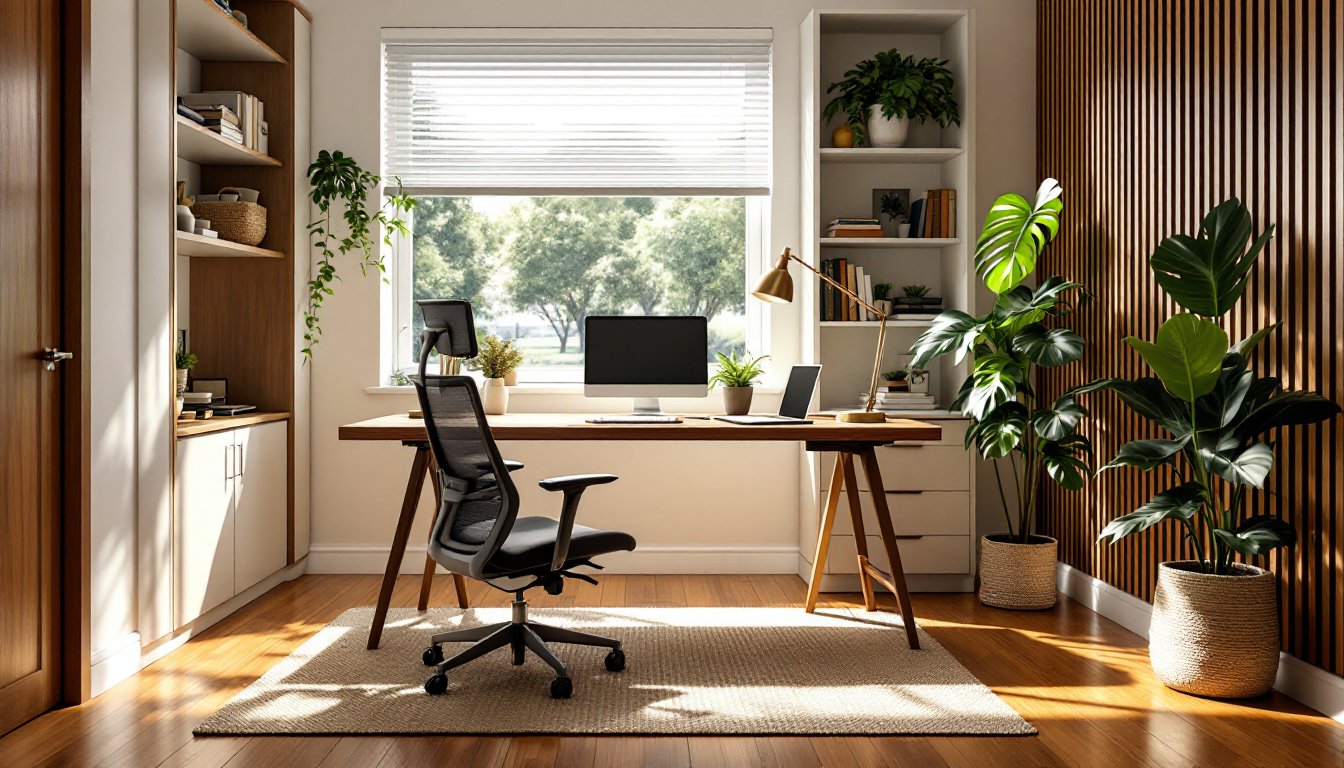
Position your desk perpendicular to windows, not facing them. Direct sunlight creates glare on screens and causes eye strain. If the room has only one wall with windows, use cellular (honeycomb) shades to diffuse light while maintaining privacy. They also provide insulation, trapped air pockets reduce heat loss by up to 40% compared to bare glass.
For interior design for small spaces, mirrors placed opposite windows amplify available daylight without adding more fixtures. A 24″ x 36″ mirror on the wall reflects light deeper into the room and makes tight quarters feel less claustrophobic.
If you’re adding or replacing windows, prioritize low-E (low-emissivity) glass with a U-factor below 0.30 and a Solar Heat Gain Coefficient (SHGC) suited to your climate. In northern regions, higher SHGC (0.50+) allows passive solar gain in winter. In southern climates, lower SHGC (0.25 or less) reduces cooling loads.
Artificial lighting should layer ambient, task, and accent sources. Swap all bulbs to LED and choose a color temperature of 3000K-4000K for office work (too warm feels sluggish, too cool feels clinical). Dimmer switches let you adjust based on time of day, make sure the LEDs are labeled dimmable, or they’ll flicker.
Task lighting is critical. A swing-arm desk lamp with a 10W LED puts light exactly where you need it without illuminating the entire room. Look for a Color Rendering Index (CRI) above 90 for accurate color when reviewing documents or design work.
For climate control, a programmable thermostat or smart model like the Nest or Ecobee reduces energy waste. If the office is a single room, a mini-split heat pump is far more efficient than extending central HVAC ductwork. Modern units hit SEER ratings above 20, which translates to real savings on a room used 8+ hours daily.
Incorporating Plants and Biophilic Design Elements
Live plants improve air quality and reduce stress, but they’re not magic filters, you’d need a greenhouse worth of foliage to match a mechanical air purifier. That said, species like pothos, snake plant, and spider plant are low-maintenance and tolerate the inconsistent light and watering most home offices provide.
Place plants near windows but out of direct, intense sun. A south-facing sill in summer can scorch leaves. If natural light is limited, a full-spectrum LED grow light (20-40W) on a timer provides 12-14 hours of supplemental light. Mount it 12-18 inches above the plant canopy.
Avoid overwatering. Most beginners kill plants with kindness, stick a finger 2 inches into the soil: if it’s damp, wait. Terra cotta pots wick moisture and prevent root rot better than plastic or glazed ceramic. Drainage holes are non-negotiable: sitting water breeds mold.
Biophilic design extends beyond potted plants. Natural textures, stone, raw wood grain, woven textiles, create visual interest without clutter. A jute or sisal rug adds warmth underfoot and is biodegradable at end-of-life, unlike synthetic carpets.
Wood accent walls or slatted panels introduce organic geometry. If you’re installing tongue-and-groove paneling, choose sustainably sourced pine or cedar. A miter saw gives clean cuts on the angled ends: a finish nailer speeds installation. Leave a 1/4-inch gap at floor and ceiling for expansion, wood moves with humidity.
Views of greenery matter. If your window overlooks a parking lot, consider a window box with herbs or ornamental grasses. It’s a small intervention, but breaking up the visual monotony of man-made surfaces has measurable effects on focus and mood. Designers are increasingly using these approaches in commercial office interior projects for the same reasons.
Sustainable Storage and Organization Solutions
Built-in shelving is more material-efficient than freestanding units and maximizes floor space. Use 3/4-inch plywood for shelves spanning up to 36 inches: anything longer needs a center support or will sag under load. Hardwood edge banding covers the exposed plywood laminations and looks cleaner than raw edges.
Wall-mounted shelves eliminate the need for a vertical frame. Locate studs with a stud finder and use #10 wood screws at least 2.5 inches long. Toggle bolts work for drywall-only sections but have lower weight capacity, check the packaging for load ratings.
For modular storage, galvanized steel wire shelving (the kind used in commercial kitchens) is fully recyclable and holds serious weight. It’s utilitarian but functional, and you can find it used from restaurant supply auctions.
Cardboard file boxes and woven baskets made from seagrass, water hyacinth, or rattan are biodegradable and far less toxic than plastic bins. They don’t off-gas and they patina over time instead of cracking like polypropylene.
Pegboard walls offer flexible organization. Standard 1/4-inch pegboard comes in hardboard (compressed wood fiber) or metal. Mount it with 1-inch spacers so hooks have clearance. Paint it with low-VOC latex to match your walls, or leave it natural. A circular saw or jigsaw cuts it to size: wear a dust mask, hardboard dust is fine and irritating.
Repurpose glass jars for small parts, fasteners, or office supplies. An old wooden ladder mounted horizontally makes a quirky shelf for books or binders. Antique filing cabinets from surplus stores often just need a cleaning and a fresh coat of paint.
Budget-Friendly Ways to Green Your Office Space
Sustainability doesn’t require a full gut renovation. Start with the lowest-cost, highest-impact changes first.
Swap out lighting. A 4-pack of LED bulbs costs around $10 and drops energy use immediately. If you have old T12 fluorescent fixtures, retrofitting to LED tubes takes 10 minutes and eliminates the flicker and hum.
Seal air leaks. A tube of acrylic latex caulk ($4) and a $6 door sweep can reduce drafts around windows, baseboards, and door thresholds. Use a smoke pencil or incense stick to find leaks on a windy day. For gaps wider than 1/4-inch, use backer rod (foam rope) before caulking.
DIY furniture refinishing. Sand down a used desk with 120-grit paper, wipe it clean, and apply a water-based polyurethane or natural oil finish like tung oil or linseed oil. Both are low-VOC and durable. A quart of poly covers about 125 square feet and costs around $15-$20.
Paint with leftovers or recycled paint. Many municipal hazardous waste facilities now offer reblended paint programs, returned latex paint is reprocessed and sold for $5-$10 per gallon. Quality varies, so ask to see a sample. Use it for accent walls or inside closets.
Thrift and salvage before buying new. Craigslist, Facebook Marketplace, and Habitat for Humanity ReStores stock usable furniture, lumber, and fixtures at steep discounts. Solid wood desks from the 1980s are built better than most new particle furniture and cost a fraction. A belt sander and some elbow grease bring them back to life.
Add insulation where accessible. If you have an attic office or a room over a garage, adding R-30 fiberglass batts or blown-in cellulose (made from recycled newspaper) is a DIY-friendly project. Wear gloves, long sleeves, goggles, and a respirator, fiberglass is itchy, and cellulose dust is a lung irritant. Proper insulation pays back in comfort and energy savings within a few years, and it’s a principle that applies across all eco-friendly decor efforts.
Control humidity. A dehumidifier in humid climates (or a small humidifier in dry winter months) keeps wood furniture stable and reduces mold risk. Target 30-50% relative humidity. Cheap hygrometers cost under $10 and take the guesswork out.
Use second-hand electronics. Refurbished monitors, keyboards, and desk accessories are widely available and far cheaper than new. Extending the useful life of electronics keeps them out of e-waste streams. Just verify the seller offers a return window in case of defects.
None of these steps alone will revolutionize your office, but stacking small, thoughtful changes builds a space that’s healthier, more efficient, and more enjoyable to work in, without the sticker shock of a full remodel.