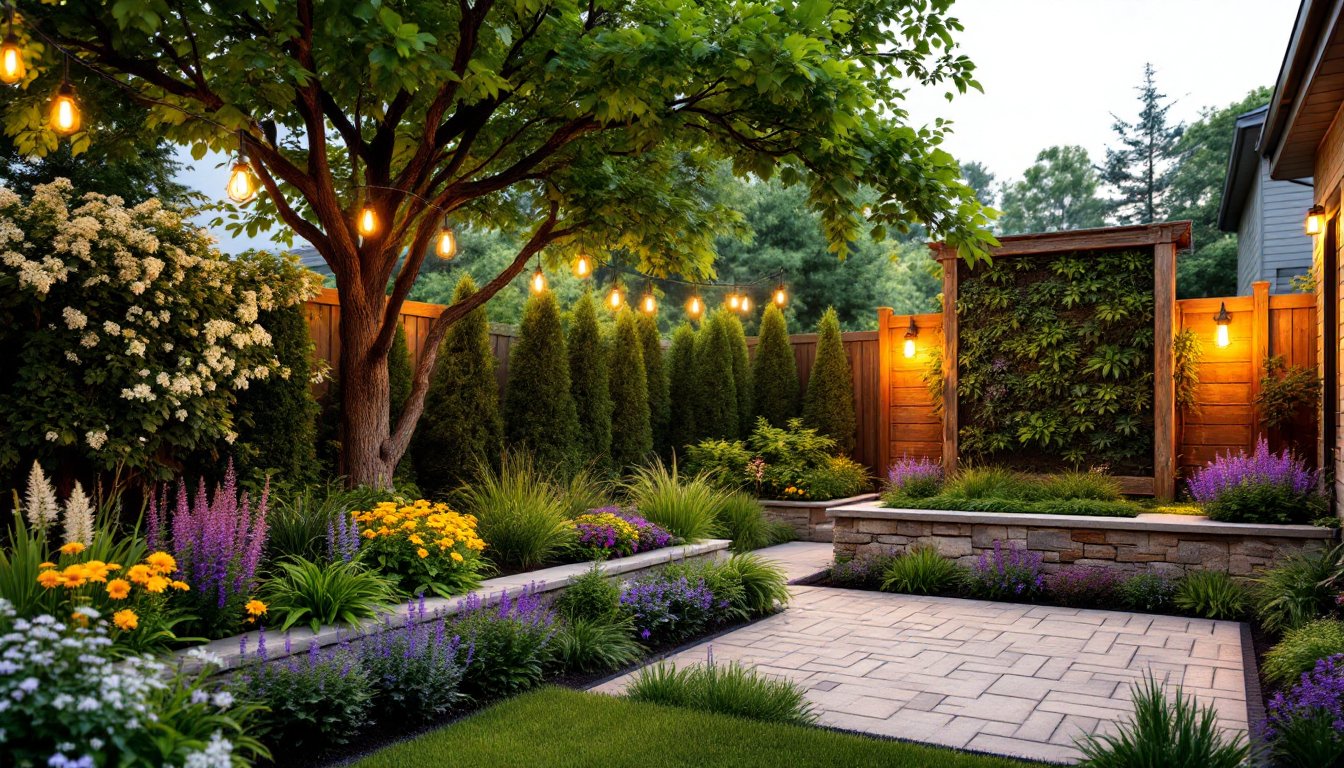
Straight lines and rigid angles dominate most front yards, but circular landscaping breaks the monotony with softness and flow that draws the eye naturally. Rounded beds, curved pathways, and circular focal points add dimension to flat spaces and create visual interest from every angle. Whether working with a mature landscape that needs refreshing or starting from scratch, circular designs offer flexibility for properties of any size. They’re also forgiving, minor measurement mistakes disappear in graceful arcs. This guide walks through practical ideas for incorporating circular elements into front yard landscaping, from simple garden beds to complete driveway designs.
Table of Contents
ToggleKey Takeaways
- Circular landscaping designs create natural visual flow and soften straight edges, making them ideal for adding dimension and curb appeal to front yards of any size.
- A simple circular garden bed should layer plants by height—groundcovers at the perimeter, mid-height perennials in the middle, and a focal specimen tree or shrub at center for maximum visual impact.
- Clean edging is critical for front yard circle landscaping; steel landscape edging, brick, or concrete wedge blocks prevent fuzzy borders that diminish the shape’s definition.
- Circular driveway islands require proper drainage by raising 6 to 8 inches above the surface and using drip irrigation rather than spray heads to prevent pavement staining.
- Plant circular beds with odd-numbered groupings (three, five, or seven of each variety) spaced evenly around the circumference to create natural clusters and maintain the shape’s integrity as the bed curves.
- Avoid overcrowding multiple circular features in small yards (under 2,000 sq. ft.)—stick to one primary focal point to achieve harmony rather than visual chaos.
Why Choose Circular Landscaping for Your Front Yard
Circles naturally guide movement and attention in ways straight edges can’t replicate. The human eye follows curves, making circular beds ideal for directing visitors from sidewalk to front door or highlighting architectural features like bay windows or entry columns.
From a practical standpoint, circular beds are easier to mow around than geometric shapes with sharp corners. A single radius measurement from a center point ensures symmetry without complicated layout work. This matters when homeowners tackle installation themselves without professional surveying equipment.
Circular designs also maximize planting area while minimizing harsh transitions. A 10-foot diameter circle provides roughly 78 square feet of planting space, enough for layered perennials, ornamental grasses, and a specimen tree or shrub as a centerpiece. The curved edge creates a natural buffer between turf and hardscape.
Rounded layouts work particularly well on sloped properties. Terraced circular beds follow contours better than rectangular designs, reducing erosion and making watering more efficient. The curves also soften retaining walls and grade changes that might otherwise look severe.
One caution: avoid overusing circles. Three or more competing circular beds in a small front yard creates visual chaos rather than harmony. For properties under 2,000 square feet of front yard space, stick to one primary circular feature with complementary curved edges elsewhere.
Classic Circle Garden Bed Ideas
The standalone circular island bed remains the most versatile option. Position it between the sidewalk and house for a traditional look, or offset it to one side for asymmetric appeal on wider lots.
For a 6 to 8-foot diameter bed, layer plants by height: low groundcovers or annual color at the perimeter, mid-height perennials in the middle ring, and a vertical accent at center. A young ornamental tree like Japanese maple (Acer palmatum) or a large ornamental grass like maiden grass (Miscanthus sinensis) works as the anchor. This creates the “thriller, filler, spiller” effect landscape designers reference.
Double or triple concentric circles add sophistication to larger properties. Install an outer ring of low plantings (sedum, catmint, or dwarf conifers) with a raised inner circle 12 to 18 inches higher, supported by stacked stone or brick. The elevation change provides dimension visible from the street.
Half-circle beds flanking a front walkway mirror each other beautifully. Match plant selections and heights for symmetry, or use complementary color schemes for subtle variation. These work especially well when the walkway itself curves, the beds echo the path’s shape.
Corner circle beds soften the junction where driveways meet sidewalks or where property lines form right angles. A radius of 4 to 6 feet typically fits without encroaching on sight lines for vehicles backing out. For those exploring broader driveway landscaping options, these corner treatments integrate seamlessly with linear borders.
Circular Driveway Landscaping Designs
Full circular driveways demand a central landscape feature, it’s wasted space otherwise. The size depends on the driveway’s turning radius, typically 12 to 20 feet in diameter for residential installations.
A specimen tree makes the strongest statement but requires planning. Choose species that won’t drop messy fruit or sap on vehicles parked nearby. Ornamental pear (Pyrus calleryana varieties), serviceberry (Amelanchier species), or zelkova (Zelkova serrata) offer seasonal interest without maintenance headaches. Plant the tree slightly off-center toward the house side, it’ll look more natural and won’t block the view when exiting.
For lower-maintenance options, design the center island as a hardscape feature rather than planting bed. A birdbath, sundial, or fountain on a gravel or decomposed granite base requires minimal upkeep while still anchoring the space. Edge with brick or cut stone in a circle matching the driveway’s curve.
Layered plantings around a central feature need irrigation consideration. Drip lines work better than spray heads in circular beds, less overspray on vehicles and more efficient watering. Run the mainline from the house side and loop it within the bed, keeping emitters at least 18 inches from the driveway edge to avoid pavement staining.
Circular driveway islands also present drainage challenges. If the driveway surface slopes toward the center (common with poorly graded installations), the island becomes a catch basin. Address this by raising the island 6 to 8 inches above the driveway surface with a stacked stone or timber edge, and backfill with well-draining soil mix, 60% native soil, 30% compost, 10% coarse sand.
Focal Point Features for Circle Landscapes
Circular beds need a reason to exist, a focal point that justifies the layout. Without one, they read as arbitrary curves.
Statuary and garden art scaled to the bed size work year-round. A 3 to 4-foot sculpture or obelisk suits an 8-foot diameter bed: anything smaller gets lost, anything larger overwhelms. Set the piece on a paver or concrete pad sunk flush with soil level for stability and to prevent sinking.
Boulders provide natural focal points, especially in regions where stone occurs in the landscape naturally. A single 2 to 3-foot moss rock or fieldstone positioned off-center creates informal balance. Bury one-third of the boulder for a natural look, perched stones look like landscaping afterthoughts.
Water features transform circular beds into sensory experiences. Self-contained fountains (no pond required) come in styles from contemporary bowls to traditional tiered designs. Size the fountain to the bed, a 24-inch diameter fountain works in a 6-foot bed, while 36 to 48-inch fountains need 10-foot beds minimum. Check local electrical codes: most require GFCI-protected outdoor outlets within 6 feet of water features.
For dramatic evening effect, consider a specimen tree underlit with low-voltage landscape lighting. Uplighting creates shadows in the canopy visible from indoors. Position one to three bullet lights 18 to 24 inches from the trunk, angled upward. Use warm white (2700K to 3000K) LEDs for natural appearance.
Even simple elements like decorative edging materials can serve as focal points when executed well. For more guidance on getting started with these techniques, homeowners can refer to resources on basic landscaping approaches.
Plant Selection and Layout Strategies
Circular beds look best with odd-numbered plant groupings, three, five, or seven of each variety. This creates natural-looking clusters rather than the lined-up appearance of even numbers.
Layer by mature height, working from the perimeter inward. Outer ring plants should max out at 12 to 18 inches tall to maintain visibility of inner layers. Middle zone plants can reach 24 to 36 inches. The center specimen may be a shrub to 6 feet or a tree eventually reaching 15 to 20 feet, depending on bed size and location.
Consider bloom time and foliage texture. A successful circular bed provides interest across three seasons minimum. Spring bulbs (daffodils, tulips) give early color, summer perennials (coneflowers, daylilies) carry through heat, and ornamental grasses or evergreen shrubs extend into fall and winter. Mixing fine-textured plants (threadleaf coreopsis, Russian sage) with bold foliage (hosta, heuchera) adds visual contrast.
Plant spacing matters more in circular layouts than rectangular beds. Space plants evenly around the circumference of each ring to avoid gaps as the bed curves. For example, placing seven plants in the outer ring of an 8-foot diameter bed means spacing them roughly 3 feet apart along the arc, not in a straight line.
Drought-tolerant species reduce maintenance and support water conservation efforts, particularly relevant in western climates. Many creative lawn-free front yard designs incorporate low-water plantings in circular beds. Native perennials adapted to local conditions generally outperform exotics and require less supplemental irrigation after establishment.
Mulch depth of 2 to 3 inches (not against plant stems) suppresses weeds and retains moisture. Shredded hardwood bark or pine straw works well: avoid dyed mulches that fade and look artificial within a season.
Edging and Border Options for Circular Beds
Clean edges make or break circular beds. Fuzzy, poorly defined borders lose the shape’s impact entirely.
Steel landscape edging in 1/8-inch thickness bends to smooth curves without kinking. It comes in 8 to 10-foot lengths: plan to overlap sections by 6 inches and secure with steel stakes every 3 feet. The top edge should sit 1/2 to 1 inch above soil level, any higher looks unfinished, any lower disappears under mulch.
Brick edging laid in a soldier course (bricks standing upright) follows gentle curves well. Set bricks in a 2-inch sand bed over compacted soil for stability. For tighter radius curves under 4 feet, the gaps between bricks become noticeable: cut stone or pavers work better.
Concrete landscape blocks designed for curves come in wedge shapes that fit together in radiused patterns. Brands like Pavestone and Belgard manufacture these specifically for circular layouts. They’re easier for DIYers than cutting standard blocks, but cost roughly 20 to 30% more than straight edging.
Natural stone (flagstone or fieldstone) set in mortar creates permanent, high-end edging. This requires more skill, getting consistent mortar joints on curves takes practice. For dry-stacked stone, choose flatter pieces and expect to reset sections periodically as soil settles.
Living edges using low-growing groundcovers (creeping thyme, sedum) soften the transition between bed and lawn but require regular trimming to maintain the circular shape. Edging shears or a string trimmer work: just mark the intended line with landscape paint or a garden hose before trimming.
For homeowners concerned about maintaining plantings long-term, understanding seasonal landscape care helps keep circular beds looking sharp year-round. Edging needs annual refreshing, even steel shifts as soil freezes and thaws.
Conclusion
Circular landscaping softens front yards with organic shapes that rectangular beds can’t match. Success comes down to proportion, clean edges, and layered plantings that provide year-round interest. Start with one well-executed circular bed rather than multiple half-finished attempts. Layout is easier than it looks, a stake, string, and can of marking paint create perfect circles without specialized tools. For anyone ready to move beyond standard foundation plantings, circles offer a tested path to standout curb appeal.