Crepe myrtles deliver what every homeowner wants: dramatic color, low maintenance, and a front yard that makes neighbors slow down. These Southern staples have spread across hardiness zones because they handle heat, tolerate drought once established, and bloom for months when most trees are just sitting there. Whether you’re framing an entryway, building a privacy screen, or replacing a tired foundation planting, crepe myrtles offer structure and seasonal interest that few trees match. This guide walks through variety selection, placement strategies, and the planting steps that set them up for decades of performance.
Table of Contents
ToggleKey Takeaways
- Front yard landscaping with crepe myrtles delivers dramatic summer blooms, peeling winter bark, low maintenance, and extended seasonal color from late June through September across most regions.
- Select crepe myrtle varieties based on mature height—dwarf (3–5 feet), mid-size (8–15 feet), or standard (20–30 feet)—to fit your space, frame entryways, and complement your home’s exterior without blocking windows or utilities.
- Plant crepe myrtles in early spring or fall in a hole two to three times wider than the root ball, use native soil for backfill, and water consistently for the first two growing seasons to establish strong roots.
- Skip harmful ‘crepe murder’ pruning; instead, remove dead branches and suckers in late winter to preserve natural form and maximize blooms.
- Pair crepe myrtles with drought-tolerant underplanting like Liriope, coneflower, and ornamental grasses, plus hardscape elements like stone pathways and uplighting to create layered, year-round visual interest.
- Choose disease-resistant modern hybrids such as Natchez, Tuscarora, or Muskogee that tolerate heat, drought once established, and resist powdery mildew and aphids in humid climates.
Why Crepe Myrtles Are Perfect for Front Yard Landscaping
Crepe myrtles (Lagerstroemia indica and hybrids) earn their spot in front yards through a combination of year-round features. Summer blooms run from late June through September in most regions, with flower clusters in white, pink, red, lavender, and purple. When the blooms fade, the bark takes over, smooth, peeling trunks in shades of cinnamon, gray, and cream add winter interest that evergreens can’t touch.
These trees adapt to a range of soil types as long as drainage is decent. They tolerate clay if it’s not waterlogged, and sandy loam suits them fine. Full sun is non-negotiable, six hours minimum, or bloom production drops off. Mature specimens handle drought well, though consistent water during the first two growing seasons is critical for root establishment.
Size flexibility is another advantage. Dwarf varieties stay under 4 feet, fitting beneath windows or along walkways. Mid-size selections reach 8 to 15 feet, ideal for flanking entries or defining property lines. Standard trees push 20 to 30 feet, providing shade and vertical drama. Unlike fast-growing trees that split in storms or heave sidewalks, crepe myrtles grow at a moderate pace and develop strong branch structure when pruned correctly.
Pest and disease resistance varies by variety, but modern hybrids, particularly those with Natchez, Tuscarora, or Muskogee parentage, show excellent resistance to powdery mildew and aphids. This matters in humid climates where older cultivars struggled.
Choosing the Right Crepe Myrtle Varieties for Your Front Yard
Variety selection starts with mature height and spread. Measure the planting area and account for overhead lines, eaves, and sight lines from driveways. A tree that looks perfect at the nursery can block windows or crowd a walkway in five years if you choose the wrong size class.
Dwarf varieties (3-5 feet): Pocomoke (dark pink), Chickasaw (pink-lavender), and Delta Blush (soft pink) work under windows, along low fences, or as foundation plants. These stay compact without constant pruning.
Mid-size varieties (8-15 feet): Acoma (white with peeling bark), Hopi (medium pink), and Tonto (fuchsia-red) fit most residential front yards. They’re tall enough to frame entries or anchor corner beds without overwhelming the space. Acoma’s weeping habit adds movement: Tonto’s dense form creates a solid screen.
Standard varieties (20-30 feet): Natchez (pure white, exfoliating bark), Tuscarora (coral-pink, mildew-resistant), and Muskogee (lavender, fast-growing) function as specimen trees or shade providers. These need room, plant them 15 to 20 feet from structures and allow 10 to 15 feet between trees for air circulation.
Bloom color should complement your home’s exterior. White varieties like Natchez and Acoma pair with any palette. Red and fuchsia cultivars (Dynamite, Tonto) pop against neutral siding but can clash with brick in warm tones. Lavender and pink selections (Muskogee, Sioux) offer softer contrast.
Cold hardiness matters. Most crepe myrtles thrive in USDA zones 7-9, but some hybrids push into zone 6 with winter protection. Check the variety’s zone rating before buying, a tree that dies back to the ground every winter won’t deliver the structure or bloom you’re after.
Design Ideas and Placement Strategies
Framing Your Entryway
Flanking a front door with matched crepe myrtles creates symmetry and draws the eye to the entry. Use mid-size varieties like Hopi or Acoma, spaced 8 to 10 feet from the door to avoid crowding the walkway as they mature. Avoid planting directly against the foundation, roots need room, and you’ll want access for maintenance.
For a less formal look, stagger three trees in graduated sizes along the walkway. Plant a standard variety (Natchez) near the street, a mid-size selection (Tonto) halfway up, and a dwarf (Pocomoke) near the porch. This layered approach adds depth and guides visitors toward the entry without rigid symmetry.
Underplant with low-growing perennials or groundcovers to hide bare lower trunks. Liriope, Mondo grass, or Knock Out roses fill space without competing for water or nutrients. Skip mulch volcanoes, 2 to 3 inches of shredded hardwood mulch spread in a 3-foot circle around the trunk is plenty. Mulch piled against bark invites rot and pest problems.
Creating a Focal Point or Privacy Screen
A single standard crepe myrtle planted in the center of a front lawn becomes an instant focal point. Choose a variety with standout bark like Natchez or Arapaho (true red blooms, chestnut bark). Give it room to develop its natural vase shape, no companion plants within 6 feet of the trunk. This setup works best on larger lots where the tree has space to grow without interfering with utilities or sightlines.
For privacy screening along a property line or to block an unsightly view, plant mid-size or standard varieties in a row with 6 to 8 feet between trunks. This spacing allows branches to overlap at maturity, forming a continuous canopy without creating a dense, impenetrable wall. Tuscarora and Muskogee fill in quickly and resist common diseases, making them reliable choices for screens.
Avoid the temptation to plant in a straight, evenly spaced line, it looks institutional. Stagger the placement slightly or alternate two varieties with different bloom colors. This breaks up the monotony while still achieving the screening effect. Homeowners who need driveway landscaping alongside their front yard often use crepe myrtles to tie the two zones together visually.
Planting and Care Essentials for Front Yard Crepe Myrtles
Plant crepe myrtles in early spring or fall when temperatures are mild and rainfall is more consistent. Container-grown trees can go in anytime, but avoid planting during summer heat or when the ground is frozen.
Dig a hole two to three times wider than the root ball but no deeper. The top of the root ball should sit level with or slightly above the surrounding soil, planting too deep suffocates roots and stunts growth. Break up compacted soil at the bottom of the hole with a spading fork to encourage downward root penetration.
Backfill with the native soil you removed. Don’t amend with compost, peat, or topsoil unless your soil is severely degraded. Roots grow better when they transition gradually to surrounding conditions rather than hitting a barrier between enriched backfill and native soil. Tamp the soil lightly to eliminate air pockets, then water deeply to settle everything.
Watering: Newly planted trees need 1 inch of water per week through the first two growing seasons. Use a soaker hose or drip irrigation to deliver water slowly at the root zone. Once established, crepe myrtles tolerate dry spells, though prolonged drought reduces bloom production.
Fertilizing: Apply a balanced fertilizer (10-10-10 or 8-8-8) in early spring as buds swell. Spread 1 cup per inch of trunk diameter around the drip line, not against the trunk. Over-fertilizing produces leggy growth and fewer blooms. Soil testing every few years helps dial in nutrient needs, extension offices offer affordable testing.
Pruning: This is where most people mess up. Crepe myrtles don’t need annual topping or “crepe murder”, the practice of hacking trees back to stubs every winter. It ruins the natural form, weakens branch structure, and reduces bloom size. Instead, prune in late winter before bud break. Remove crossing branches, suckers from the base, and any dead or damaged wood. Thin the canopy to improve air circulation if mildew is a recurring issue. For those new to pruning, landscaping for beginners resources can build confidence with basic techniques.
Pest and disease management: Watch for aphids in early summer, they excrete honeydew that attracts sooty mold. A strong spray from the hose knocks them off, or insecticidal soap handles heavy infestations. Powdery mildew appears as white fuzz on leaves in humid conditions. Resistant varieties avoid this, but improving air circulation through pruning helps if you’re stuck with a susceptible cultivar. Japanese beetles chew foliage in some regions, handpick them in early morning when they’re sluggish, or use a labeled insecticide if populations explode.
Winter protection: In zone 6 or marginal zone 7 areas, mulch heavily around the root zone in late fall and consider wrapping young trunks with burlap if temperatures regularly dip below 0°F. Established trees handle cold better, but late spring freezes can damage new growth.
Complementary Plants and Landscaping Elements
Underplanting crepe myrtles with perennials and groundcovers creates a layered look and fills space while the trees mature. Choose plants that tolerate the same conditions, full sun, well-drained soil, and occasional drought.
Low-growing perennials: Salvia, coneflower, and black-eyed Susan bloom in summer alongside crepe myrtles, extending the color show. Daylilies and ornamental grasses add texture and movement. Space perennials 12 to 18 inches from the trunk to avoid root competition.
Groundcovers: Liriope and Mondo grass tolerate shade from the tree canopy and suppress weeds. Creeping thyme and sedum work in hot, dry spots where irrigation is limited. According to growing guides for regional plants, pairing drought-tolerant companions with crepe myrtles reduces water needs across the landscape.
Shrubs: Boxwood, dwarf hollies, and compact hydrangeas provide evergreen structure beneath deciduous crepe myrtles. Plant shrubs 3 to 4 feet from the trunk, depending on mature spread. Avoid aggressive shrubs that compete for nutrients or block lower branches.
Mulch and edging: Define planting beds with metal, stone, or brick edging to keep mulch in place and grass out. Spread 2 to 3 inches of shredded hardwood or pine bark mulch across the bed, refreshing annually as it decomposes. Mulch conserves moisture, moderates soil temperature, and gives the landscape a finished look.
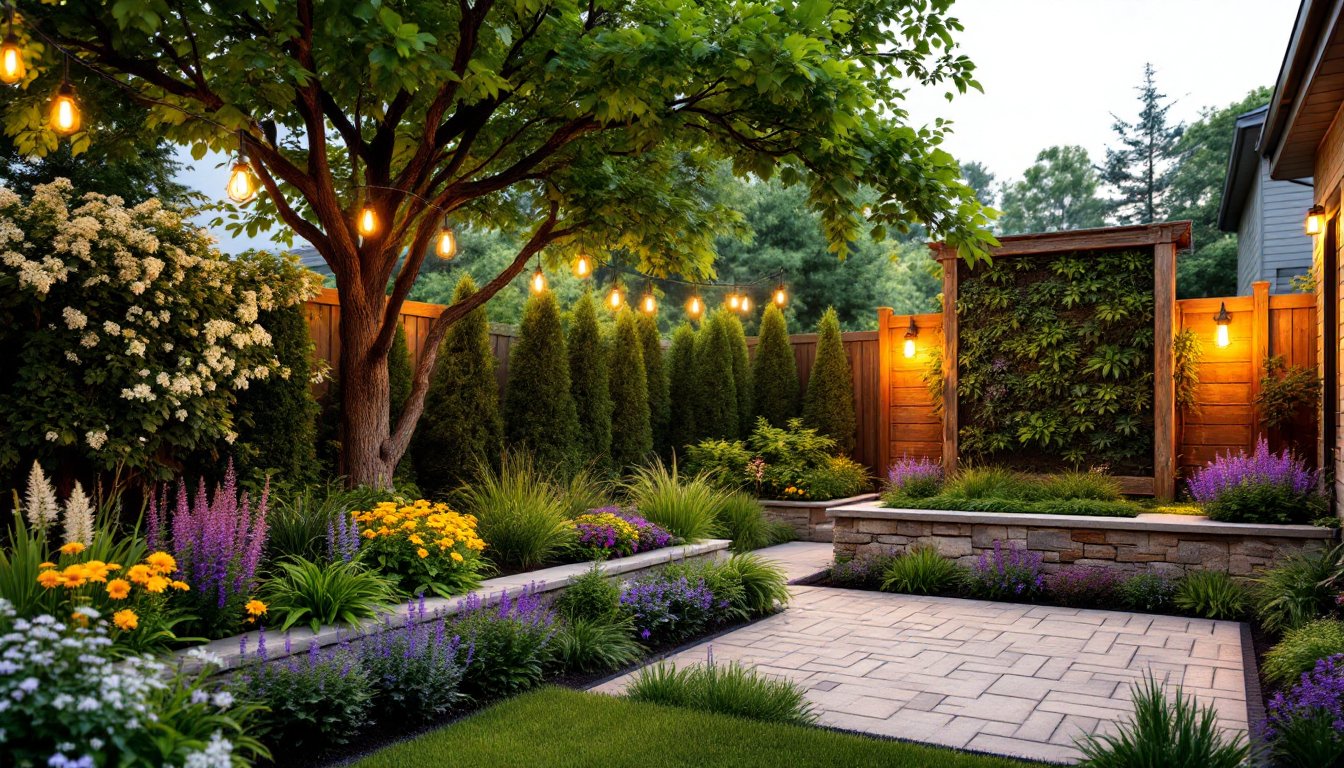
Hardscape elements: Crepe myrtles pair well with stone pathways, gravel courtyards, and decorative boulders. The smooth bark contrasts nicely with rough stone textures. Low-voltage landscape lighting positioned to uplight the trunk and canopy creates dramatic nighttime interest, especially when bark color and branching structure shine. Homeowners exploring design ideas for outdoor living spaces often feature crepe myrtles as anchors for patios and seating areas.
Seasonal bulbs: Plant spring bulbs like daffodils and tulips beneath crepe myrtles for early color before the trees leaf out. Summer bulbs, canna, gladiolus, bloom during the crepe myrtle’s peak and extend the show. Bulbs naturalize over time, filling in gaps without extra effort.
Avoid planting shallow-rooted annuals that require frequent watering or tilling. The disturbance stresses tree roots and competes for resources. Stick with perennials and shrubs that establish once and return year after year. For additional plant pairing ideas, many homeowners consult gardening guides for regional selections to match climate and soil conditions.
Crepe myrtles anchor a front yard with structure, color, and minimal fuss. Choose varieties that fit your space, plant them right, skip the brutal pruning, and let them do what they do best.