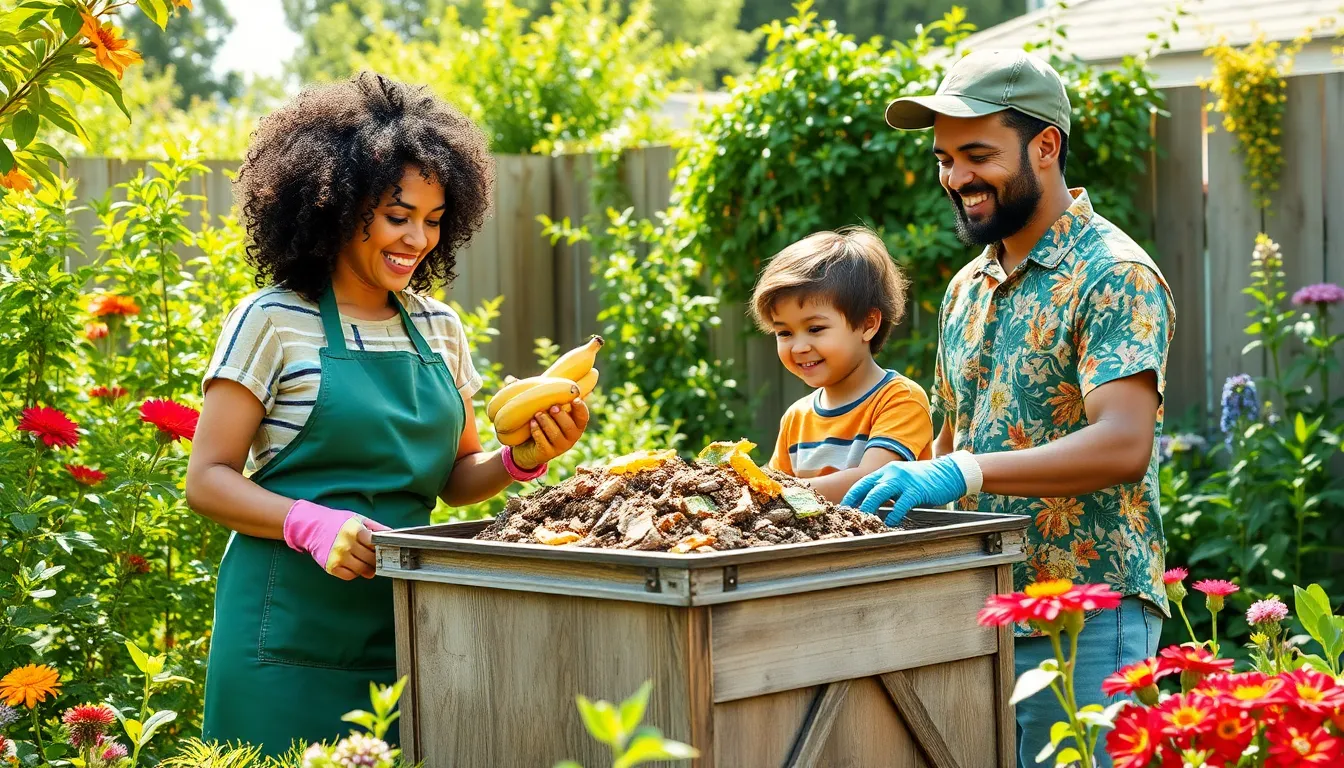
Imagine turning your kitchen scraps and yard waste into black gold for your garden. Composting isn’t just for the eco-warriors; it’s for anyone who wants to give their plants a fighting chance while reducing waste. With just a little effort, anyone can transform banana peels and lawn clippings into nutrient-rich compost that’ll make their garden the envy of the neighborhood.
Table of Contents
ToggleUnderstanding Composting
Composting transforms organic materials into nutrient-rich soil. Many individuals use composting to reduce waste while enhancing garden health.
What Is Compost?
Compost consists of decomposed organic material, such as food scraps and yard waste. Microorganisms, including bacteria and fungi, play a crucial role in breaking down these materials. Over time, the decomposition process creates a dark, rich soil amendment known as compost. This process can take several weeks to several months, depending on various factors such as aeration and moisture levels.
Benefits of Composting
Composting offers multiple advantages. First, it enriches garden soil, enhancing its ability to retain moisture and nutrients. Second, composting reduces landfill waste significantly; approximately 30% of household waste consists of organic materials. Third, using compost minimizes the need for chemical fertilizers, promoting healthier plants and a more sustainable gardening approach. Additionally, composting fosters a balanced ecosystem, attracting beneficial organisms that support plant growth.
Materials Needed for Composting
Successful composting requires a balanced mix of materials to promote efficient decomposition. The right ingredients enhance nutrient content, improve soil structure, and encourage beneficial microorganisms.
Green Materials
Green materials provide essential nitrogen to the compost pile. Kitchen scraps such as fruit peels, vegetable trimmings, and coffee grounds serve as excellent examples. Fresh grass clippings and young plant trimmings also qualify as green materials. Adding these items helps create a rich compost that supports plant growth.
Brown Materials
Brown materials offer carbon, playing a crucial role in the composting process. Dry leaves, twigs, and cardboard are common examples of brown materials. Shredded paper and straw also contribute to carbon content. Mixing these ingredients with green materials creates a balanced compost pile that decomposes efficiently.
Other Ingredients
Microorganisms thrive on moisture and air in composting. Water helps maintain humidity levels, ensuring decomposition occurs. Turning the pile regularly increases aeration, which speeds up the breakdown of organic matter. Additionally, garden soil or finished compost introduces helpful microorganisms, enhancing the composting process.
Steps to Make Compost
Creating compost involves simple steps that anyone can follow. These steps ensure the production of nutrient-rich soil for gardens.
Choosing a Compost Bin
Selecting the right compost bin is essential. Various options include plastic bins, wooden frames, and metal composters. A well-ventilated bin enables airflow, promoting efficient decomposition. Consider the size based on available space and desired compost quantity. It’s crucial to ensure the material allows for drainage and moisture retention. A suitable compost bin supports optimal conditions for composting.
Layering Your Ingredients
Layering ingredients effectively aids decomposition. Start with a base of coarse materials like twigs or straw for aeration. Follow this with greens, such as kitchen scraps and fresh grass clippings, to provide nitrogen. Next, add browns like dry leaves and shredded paper for carbon. Aim for a balance of about one part green to two parts brown. Regular layering creates an ideal environment for microorganisms to thrive and break down organic matter.
Maintaining Your Compost
Maintaining compost ensures a quick and effective breakdown of materials. Regularly turn the compost pile with a pitchfork or shovel to introduce oxygen. Keep the compost moist, resembling a wrung-out sponge. If the pile dries out, add water to restore the moisture balance. Monitoring temperature aids in identifying decomposition progress; an ideal range is between 130°F and 160°F. Addressing these factors accelerates composting and enhances nutrient content.
Troubleshooting Common Issues
Composting can occasionally present challenges. Below are common issues and their solutions.
Odors and Pests
Strong odors often indicate an imbalance in compost materials. Smells arise from excess nitrogen-rich greens, such as kitchen scraps. Balancing browns, like dry leaves, helps mitigate odors. Additionally, covering compost with a layer of browns prevents pests from accessing food scraps. Attracting pests suggests improper composting practices. Ensuring a well-ventilated compost pile reduces odor and pest issues effectively.
Moisture Levels
Moisture plays a crucial role in composting. Excess moisture leads to soggy piles, increasing odor issues and slowing decomposition. A dry pile causes materials to break down slowly due to insufficient moisture. Regularly checking the pile’s moisture level maintains balance. If the pile feels too dry, add water or green materials; if it’s too wet, mix in brown materials to absorb excess moisture.
Temperature Control
Maintaining appropriate temperatures ensures efficient decomposition. Compost piles should ideally reach 130°F to 150°F for effective microbial activity. If the temperature drops, turning the pile increases aeration and reintroduces oxygen. Conversely, excessive heat indicates too much nitrogen or insufficient moisture. Adding carbon-rich materials balances the compost and restores ideal temperatures for optimal breakdown.
Embracing composting can significantly benefit both gardens and the environment. By turning everyday waste into nutrient-rich compost, individuals can enhance soil health and promote sustainable gardening practices.
The process is straightforward and rewarding. With a little effort and attention to balance, anyone can create their own compost. Regular maintenance and monitoring can help overcome common challenges, ensuring a successful composting experience.
Ultimately, composting not only reduces waste but also fosters a thriving ecosystem that supports plant growth. It’s a simple yet powerful way to contribute to a healthier planet.