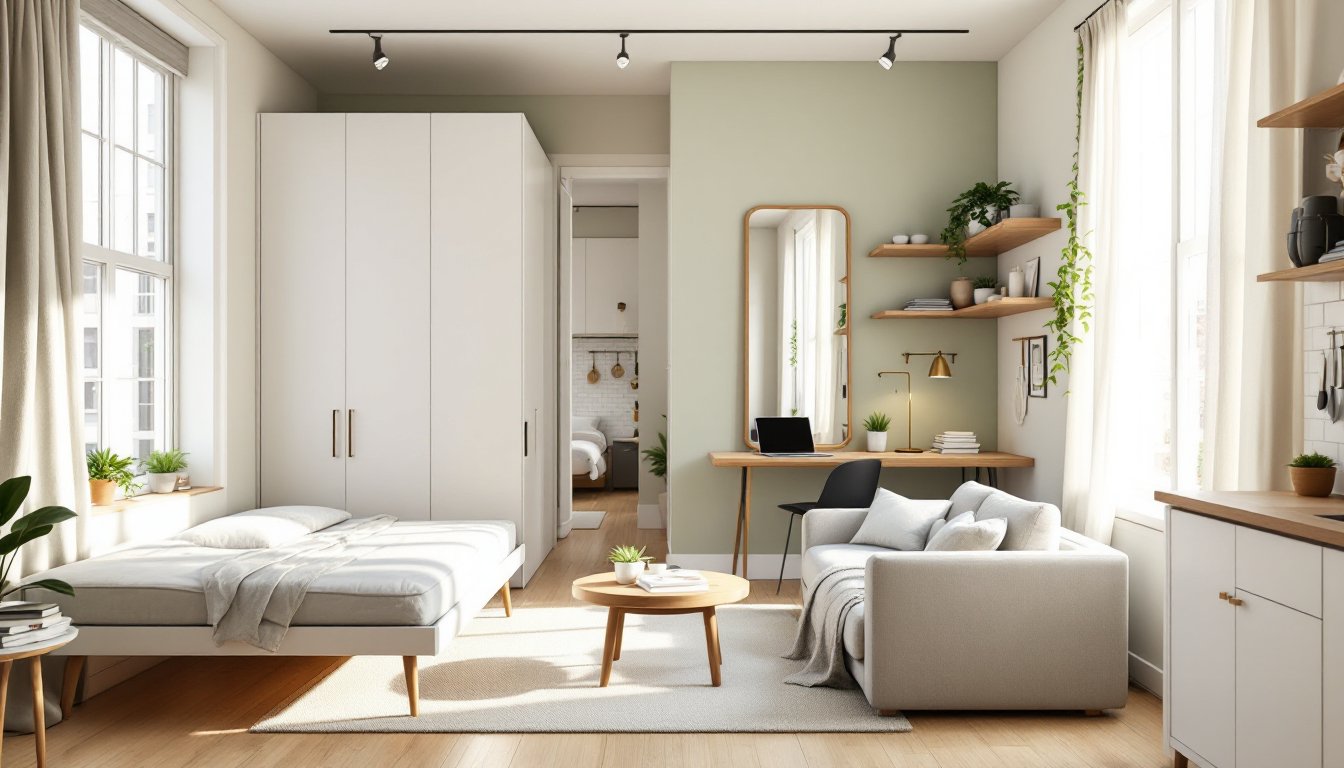
New York City apartments come with a particular set of design constraints. Pre-war layouts with odd angles, galley kitchens barely wide enough for two people, and “cozy” bedrooms that fit a queen bed with inches to spare, these are the realities of city living. But space limitations don’t mean compromising on style or function. With the right strategies, even a 400-square-foot studio can feel open, intentional, and worthy of the rent check. This guide walks through practical, actionable design tactics tailored to the specific challenges NYC renters and owners face daily.
Table of Contents
ToggleKey Takeaways
- NYC apartment interior design requires strategic furniture selection—prioritize multifunctional pieces with taller legs that create visual breathing room and allow light to flow underneath.
- Light colors, satin finishes, layered lighting, and strategically placed mirrors are essential tricks to make compact spaces feel larger and brighter without permanent modifications.
- Maximize vertical storage by installing ceiling-height shelving, using under-bed rolling bins, and adding floating shelves to transform wasted wall and ceiling space into functional storage.
- Define zones in studios and open-concept layouts using area rugs, bookcases as dividers, and consistent lighting to create distinct sleeping, working, and living areas within a single room.
- Renter-friendly solutions like removable wallpaper, peel-and-stick backsplash, and freestanding Murphy beds allow impactful transformations while respecting lease restrictions and avoiding permanent structural changes.
- Budget-friendly updates such as DIY floating shelves, thrifted furniture finds, and seasonal textile swaps deliver high-impact design changes for under $100 without breaking the bank.
Understanding the Unique Challenges of NYC Apartment Design
NYC apartments weren’t designed with modern living in mind. Many buildings date back decades, featuring quirks like radiators that jut out at inconvenient spots, windows that face brick walls three feet away, and closets that might charitably be called “nooks.” Vertical space often goes to waste while floor space is at a premium.
Light is another hurdle. Ground-floor units and north-facing windows mean natural light is scarce, making rooms feel smaller and dingier than they are. Add in strict lease restrictions, no permanent wall modifications, no paint in some cases, and the challenge intensifies.
Renters face additional constraints. Drilling into brick or plaster requires careful planning, and any modifications must be reversible. Structural changes are off the table entirely. That said, understanding these limitations upfront allows for smarter planning. Furniture that doesn’t require wall anchoring, temporary solutions like peel-and-stick backsplash or removable wallpaper, and freestanding storage units become the toolkit for transformation without violating lease terms.
Space-Saving Furniture Solutions for Compact Living
Furniture selection makes or breaks small-space design. Bulky sectionals and oversized dining tables eat square footage without adding proportional value. Instead, prioritize pieces that multitask.
Murphy beds remain a go-to for studio apartments. Modern versions integrate shelving or fold into credenzas that double as desks. Wall-mounted models require secure anchoring into studs, typically 16 inches on center, so check lease terms before installation. Freestanding Murphy bed frames exist but take up more floor space.
Extendable dining tables serve as desks, workspace, and dinner tables. Look for models with drop leaves or butterfly extensions that expand from a compact 30-inch square to seat six when needed. Pair with stackable chairs or backless stools that slide completely under the table.
Consider nesting tables and ottomans with hidden storage. These add surface area or seating on demand without permanent spatial commitment. Sofa beds have improved dramatically in recent years, opt for models with actual mattresses rather than thin futon cushions. Many design-forward small-space furniture solutions now balance aesthetics with function.
Avoid furniture with legs shorter than four inches. Low-profile pieces make ceilings feel lower and complicate cleaning underneath. Conversely, furniture on taller, slender legs (six to eight inches) creates visual breathing room and allows light to flow under and around.
Color Schemes and Lighting Tricks to Make Rooms Feel Larger
Paint color dramatically affects perceived space. Light neutrals, whites, soft grays, warm beiges, reflect more light and push walls visually outward. Contrary to popular belief, painting an accent wall a darker shade can add depth rather than shrink a room, but limit it to one wall and choose a surface opposite a light source.
Matte finishes absorb light: eggshell or satin sheens bounce it around, amplifying brightness. If the lease prohibits paint, large-scale artwork or peel-and-stick wallpaper on one wall creates a similar focal effect without permanent changes.
Lighting is just as critical as color. Overhead fixtures alone create harsh shadows. Layer lighting with floor lamps, table lamps, and wall sconces to eliminate dark corners. Battery-operated or plug-in sconces work for renters who can’t hardwire. Use LED bulbs in the 2700K to 3000K range (warm white) for living spaces: cooler tones (3500K to 4000K) suit task lighting in kitchens or home offices.
Mirrors are non-negotiable. Position a large mirror opposite or adjacent to a window to double natural light. Leaning a full-length mirror against a wall avoids the need for mounting hardware. Mirrored furniture, like console tables or cabinet doors, adds reflective surface without dominating visually. The trick is strategic placement rather than overuse, which can veer into funhouse territory.
Smart Storage Ideas That Don’t Sacrifice Style
Storage in NYC apartments is a creative puzzle. Closets are minimal, and bringing in bulky armoires wastes precious floor space. The solution lies in maximizing vertical real estate and hidden compartments.
Ceiling-height shelving units take advantage of the often-wasted upper third of a room. IKEA’s Billy bookcases or industrial pipe shelving can reach eight or nine feet with added stability brackets. Store off-season items or rarely used gear in labeled bins on top shelves. Use a small step stool (foldable models stash easily) for access.
Under-bed storage is obvious but underutilized. Platform beds with built-in drawers eliminate the need for separate dressers. If the bed frame doesn’t have drawers, slide flat rolling bins (four to six inches tall) underneath. Bed risers can add another few inches of clearance, but keep total bed height reasonable to avoid a climbing-in situation.
Kitchen storage demands ingenuity. Over-the-door organizers for pantry items, pot lid racks mounted inside cabinet doors, and pull-out drawer inserts for spices reclaim dead space. Magnetic knife strips and wall-mounted utensil rails free up counter and drawer real estate. Applying interior design for small spaces strategies can reveal additional options.
Floating shelves add storage without the visual heft of cabinets. Install them with hollow-wall anchors rated for 50+ pounds if studs aren’t available at desired locations. Display attractive dishware, plants, or books to keep the look curated rather than cluttered.
Defining Zones in Open-Concept or Studio Layouts
Studios and railroad apartments lack the natural boundaries of separate rooms. Defining distinct zones for sleeping, working, and relaxing without physical walls requires deliberate furniture placement and visual cues.
Area rugs are the simplest zoning tool. A rug under the bed delineates the sleeping area: another under the sofa and coffee table marks the living space. Choose rugs that fit the furniture footprint, front legs of sofas and chairs should rest on the rug, not float beyond it. Defining functional zones effectively improves both flow and mental clarity in compact layouts.
Bookcases and open shelving units serve as room dividers without blocking light or airflow. Position a five- or six-foot-tall bookcase perpendicular to a wall to separate the bedroom from the living area. Back it with attractive bins or artwork so both sides look intentional.
Curtains or sliding panels offer flexible separation. Ceiling-mounted tracks (installed into joists or with heavy-duty anchors) allow fabric panels to slide across a space, concealing the bed or creating a temporary home office. Sheer fabrics maintain light flow: heavier textiles provide privacy and sound dampening.
Furniture arrangement also signals zones. Position the sofa with its back to the sleeping area rather than facing it. Use a console table behind the sofa as a desk or bar cart, it adds function and a subtle divider. Consistent lighting within each zone reinforces separation: a reading lamp by the bed, task lighting at the desk, ambient lighting in the living area.
Budget-Friendly NYC Apartment Makeover Tips
NYC rents don’t leave much budget for interior upgrades, but impactful changes don’t require emptying a savings account. Focus spending on high-visibility, high-function items and DIY the rest.
Paint (if allowed) is the best return on investment. A gallon covers roughly 350 to 400 square feet and costs $30 to $60 for quality interior latex. Transforming a single accent wall or freshening trim takes a weekend and minimal skill. If painting isn’t permitted, removable wallpaper offers pattern and color for $30 to $100 per roll, covering about 28 square feet. It peels off cleanly at move-out.
Thrifting and secondhand shopping are essential in NYC. Websites like Craigslist, Facebook Marketplace, and neighborhood Buy Nothing groups turn over furniture constantly. Inspect for bedbugs (check seams, crevices, and underside joints) and structural soundness. A $50 solid wood dresser beats a $300 particle board one every time. Swapping hardware, drawer pulls, cabinet knobs, for $20 to $40 modernizes dated pieces instantly.
DIY projects stretch dollars further. Building simple floating shelves from 1×8 or 1×10 pine boards (around $12 to $18 per six-foot length at Home Depot) and L-brackets (about $3 each) costs a fraction of pre-made units. Sand, prime, and paint or stain to match the space. A miter saw makes cleaner cuts than a circular saw, but both work. Wear safety goggles and a dust mask during cutting and sanding.
Refreshing textiles, throw pillows, curtains, bedding, updates a room for under $100. Choose washable fabrics and neutral bases with one or two colorful accents to avoid trend fatigue. Swap seasonal textiles to keep the space feeling current without re-buying furniture.
Conclusion
Designing a NYC apartment isn’t about fighting against the space, it’s about working with its quirks strategically. Thoughtful furniture choices, smart color and lighting, creative storage, clear zoning, and budget-conscious updates turn constrained square footage into a functional, stylish home. The goal isn’t to make a 500-square-foot apartment feel like a suburban house: it’s to make every inch count. For more ideas on maximizing compact layouts, explore proven interior design concepts and stay updated on urban design trends that continue shaping how city dwellers approach small-space living.